

This post was originally published on this site.
Gianni Georgiades became CEO of footwear phenomenon FitFlop in 2021, in the wake of the pandemic. While he had no experience of dealing with the aftermath of a global lockdown (who did?), he had plenty of experience in the world of footwear, having held senior roles at Lacoste Footwear, Deckers (UGG) and Coach.
The FitFlop brand was founded by serial entrepreneur Marcia Kilgore in 2007. A visionary – known for establishing such names as Bliss Spa, Soap & Glory, Soaper Duper and Beauty Pie – Kilgore poured her passion for wellness into footwear, creating biomechanically engineered flip flops that tone the legs and protect the feet while you walk.
As with much of what Kilgore has achieved in her career, FitFlop was ahead of its time. When Georgiades arrived at the brand around 14 years after its launch, the global wellness movement, foretold by Kilgore, was in full swing. Consumers had spent much of the pandemic obsessing about self-improvement and that trend was continuing to grow.
FitFlop was perfectly positioned to take advantage of this burgeoning wellness movement and continue to drive its growth. At the time of his appointment, Georgiades described his role as a “one-of-a-kind opportunity in footwear, with the zeitgeist shifting fast toward wellness, health, alignment and balance”. He was right.
Kilgore is still involved in the brand, and the pair have a great working relationship, but Georgiades is the one driving the business daily, with what he describes as a “hands on, hands off” approach. By this he means that he’s closely involved in strategy, product, brand and commercial execution, but he is also happy to allow specialist teams within the business to operate with autonomy. And there’s a lot of specialist knowledge that goes into creating a FitFlop shoe.
We meet Georgiades at the brand’s smart Hammersmith HQ and it’s clear from the first glance at its showroom that FitFlop has evolved significantly beyond its core product of “double density” flip flops. There are shoes for every occasion from ballet flats to sneakers, clogs, boots, sandals, slippers, formal styles and more. Some have the signature double-density sole, but many have a new single-density sole, which has been introduced across the range in the past two years.
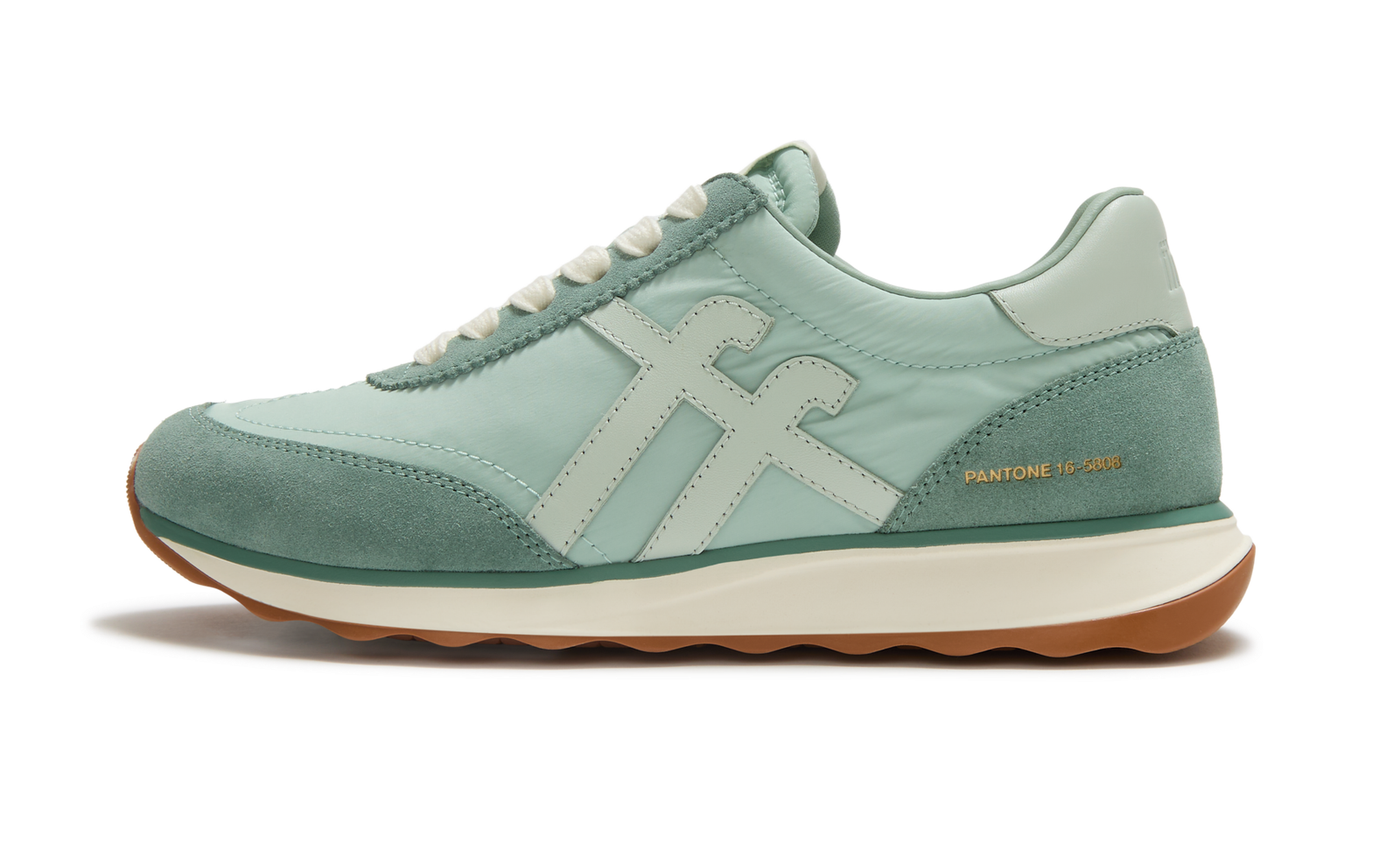
FitFlop X Pantone
This new sole has allowed FitFlop to introduced more “fashion” styles to its line-up, but Georgiades is at pains to point out that FitFlop is not a fashion brand (though it has done some great fashion collabs, including on with British-based designer Roksanda, and a new range has just launched with Pantone). Chasing fashion is not what it’s about. Getting consumers into its footwear and experiencing what Georgiades calls the “relief” and “energy return” from the experience is key. Once people try them, they become addicted. They are great for wearing all day and they are also a good option for slipping on after a workout to help the feet recover.
The reason why the shoes are so comfortable is down to a scientifically-intensive product development process. FitFlop has partnered with Volumental, a science-driven company founded in 2012 by PhD students, with a single mission: to create better fit through advanced foot scanning technology. The system is informed by aggregate 3D foot data from millions of scans across Europe, the US and Asia providing FitFlop with access to a uniquely broad understanding of global foot variation.
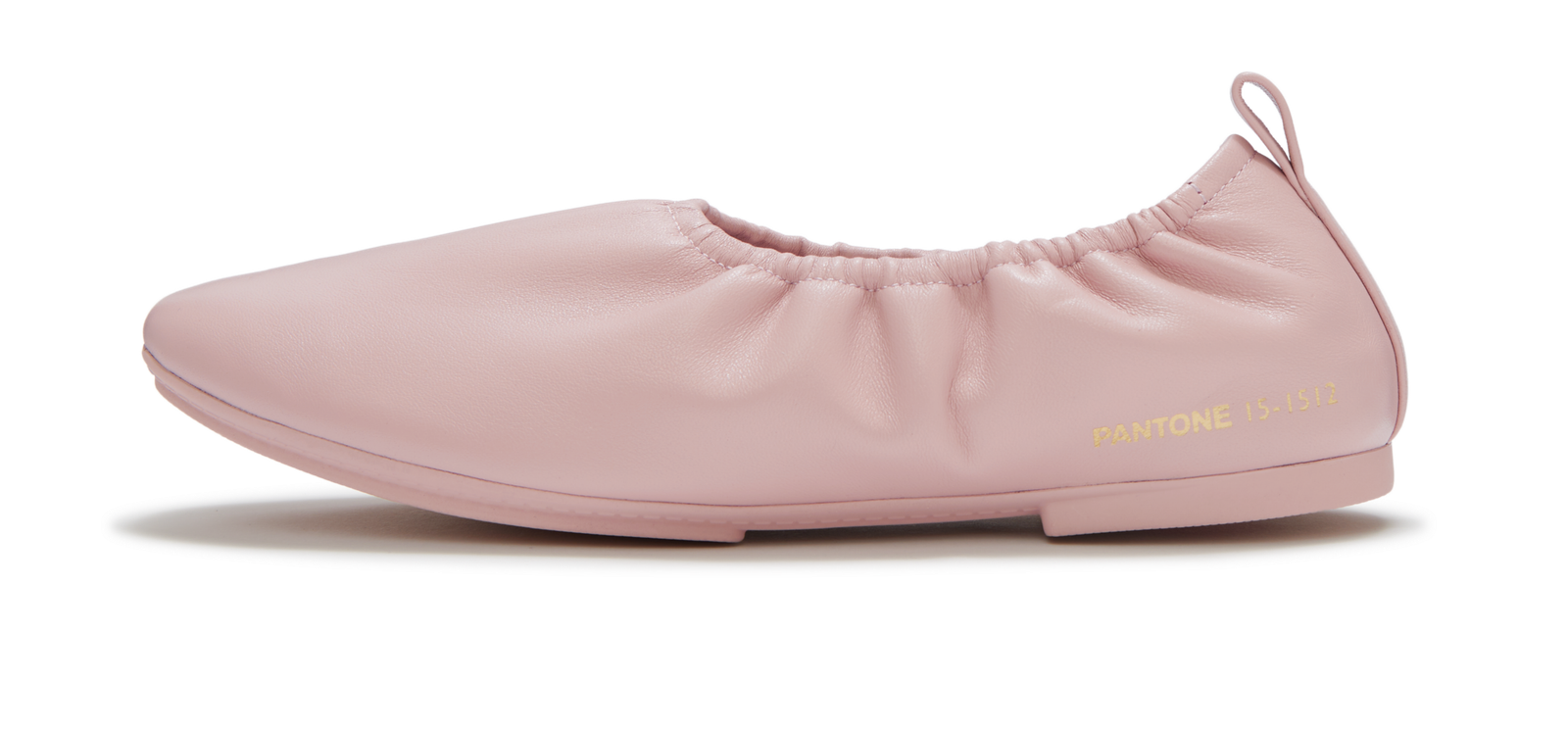
FitFlop X Pantone
The scanner captures thousands of data points to create a 3D model of the foot. With the data provided by Volumental, FitFlop refines its shoes, creating footwear “that is hyper focused on foot shape, delivering improved fit, enhanced comfort, durability, and performance.”
“The single biggest thing that attracted me [to this role] was the USP. Our products have biomechanically engineered midsoles, and having worked with UGG for six years where comfort was about materialisation, FitFlop had a unique place in the marketplace,” explains Georgiades.
Given he had absolute faith in the product and the technology within it, his priorities when he arrived were to “sharpen the brand positioning, rebuild commercial discipline – that’s margin structure, channel strategy, SKU efficiency – and unify product and brand storytelling so everything felt coherent and elevated. And probably the most important piece was bringing in the right team to bring the vision to life. We’ve moved from being a broad comfort player to a more clearly defined science-backed global brand with strong recognisable aesthetics.”
One of those key appointments was Louise Noble, who was appointed FitFlop’s Chief Product Officer in July 2025. She brought more than 25 years of experience and had worked with brands including Nike, Clarks and, most recently, Vivobarefoot. It was a crucial role.
“Product is king,” says Georgiades, “Everything we do is tested in a human performance lab. It’s clinically engineered, and unlike some others where it’s cosmetic, everything for us has a purpose and a reason for being. We are transitioning from legacy double-density builds to lighter single-density engineered midsoles. That’s taken us about two years to get there. We’ve expanded into sneakers, boots, clogs, and they’ve all got performance credibility. We try to fuse comfort and aesthetics, because one without the other does not work long term.”
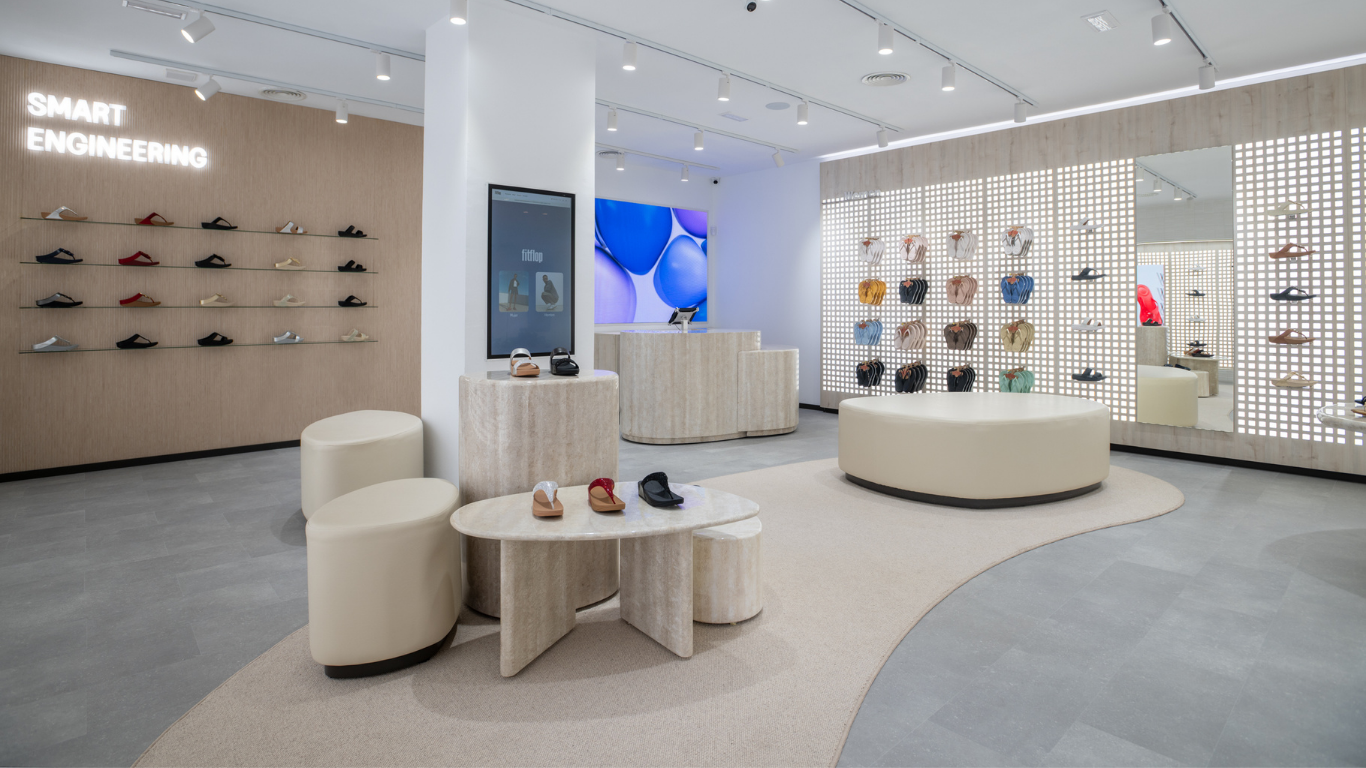
FitFlop Puerto Banús
One of the challenges for the brand is to tell this story to its community and potential customers. A physical retail presence is crucial for this and, while it has partner brand retailers (including John Lewis), the brand is expanding its own retail portfolio globally. In 2022 its first standalone UK was opened in Westfield London, and in May of this year, it launched a 969 sq ft shop in Puerto Banús, Marbella, marking its first standalone location in Europe. There will be more to come.
“Digital is our global flagship, but physical retail matters because when someone puts their feet into the product, they understand why. Our conversion is very high once they try it on. We’ll continue to open retail through our partners in city-centre, high-profile but highly profitable locations.
“APAC is one of our strongest territories, with South Korea, the Philippines and Thailand all accelerating. And we’re about to announce a partnership in China, which is the second-biggest footwear market in the world and a new market for us,” Georgiades says.
What’s quite remarkable is that FitFlop, which a household name, is still entirely independent and self-financed, so any decisions and subsequent actions can be carried out at the pace which suits the business. There are no impatient investors.
“Everything we do, we pay for ourselves. We have a credit facility but no big backers behind us. You can have more control, move at your own pace. But it’s not easy. We’ve had to deal with Covid, tariffs, inflation, geopolitical issues. We’ve started to expect a curveball in any given year. That actually keeps you sharp. You’re not complacent,” Georgiades says.
This fact also means the brand can retain its essence, purpose and commitment to quality and performance, while it continues to grow.
“There is no reason why this brand can’t be a multi, multi-hundred-million-dollar business. Some brands out there are billion-dollar businesses with no soul,” he concludes. “We have a purpose. Spring ’27 is a huge moment for us, and I’d say the next two to three years are going to look very exciting. It takes time, but we’re proud of what we’re achieving at the moment.”