

This post was originally published on this site.
Reformation has come a long way since it began as a vintage clothing boutique in Los Angeles in 2009. The sustainable womenswear brand has grown into a global fashion business, known for its vintage-inspired silhouettes, celebrity following and focus on lower-impact production.
Now preparing to list on the New York Stock Exchange with a target valuation of up to $1bn, the retailer operates more than 70 stores across the US, UK, Canada and France.
Since launching its Retail X concept in 2017, Reformation has attempted to merge the convenience of e-commerce with physical retail, using technology to simplify browsing and trying on clothes.
TheIndustry.fashion visited its Covent Garden store to find out whether the concept really improves the shopping experience.
Location
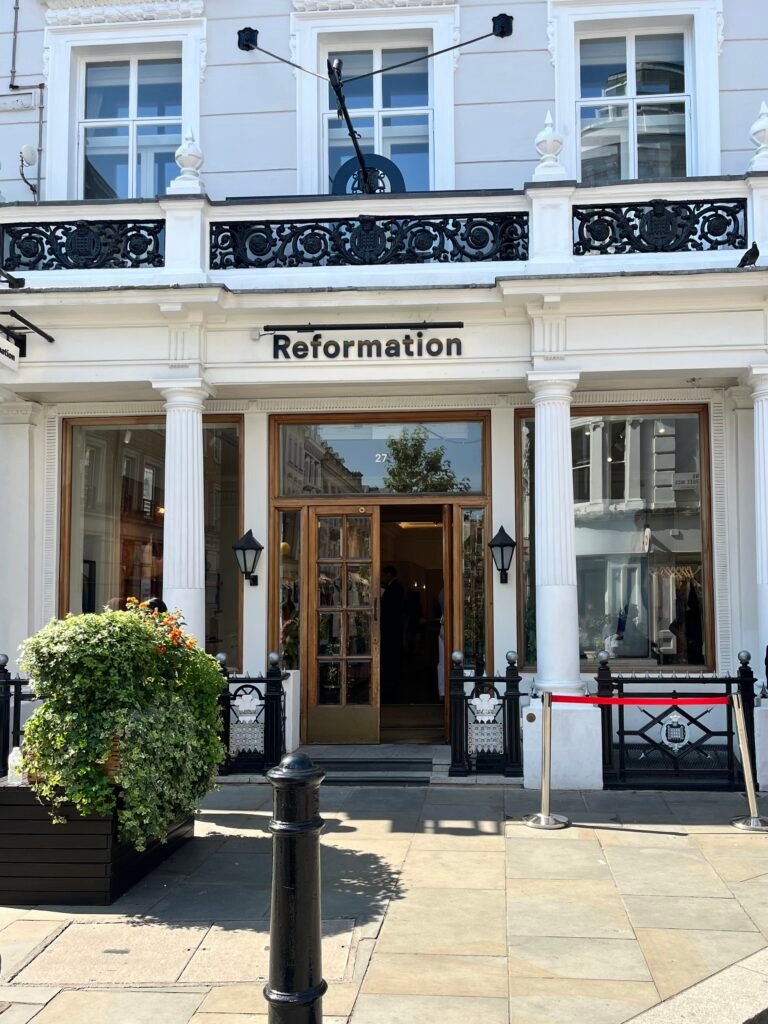
Located on King Street in the heart of Covent Garden, Reformation sits among luxury fashion retailers, restaurants and independent boutiques. Just around the corner from the Piazza, cheers from the crowds gathered around the street performers remind you that you’re shopping in one of London’s busiest areas. A velvet rope was set up outside the entrance anticipating crowds, but thankfully there was no queue when I visited on a weekday afternoon.
Reformation has built its reputation dressing Instagram’s cool girls, but inside I found a much broader range of shoppers. There was a mix of Londoners, tourists, a man in a suit stopping by after work and two children playing on their phones while their family members tried things on.
Windows and entrance
Like the brand itself, the exterior is understated. Large windows allow passers-by to see straight into the minimalist space and there are just a couple of mannequins showcasing simple outfits.
A security guard welcomed every customer before giving us a small card with a QR code. At first, I wasn’t entirely sure why. It wasn’t immediately obvious that this was how you joined the virtual fitting room queue, and without a brief explanation it could easily be mistaken for a piece of marketing.
Five members of staff moved around the shop floor, dressed in their own clothes rather than uniforms, but their earpieces helpfully gave away who actually worked there. They were friendly and approachable, checking whether shoppers wanted to try anything on without being overly pushy.
Store fit and product range
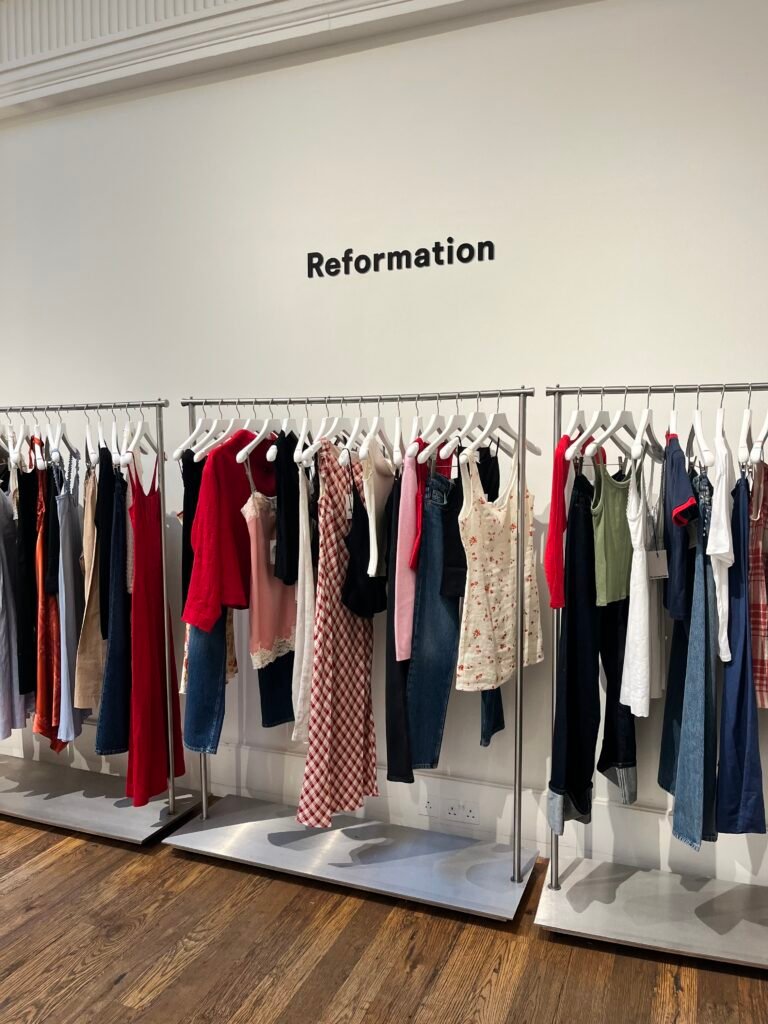
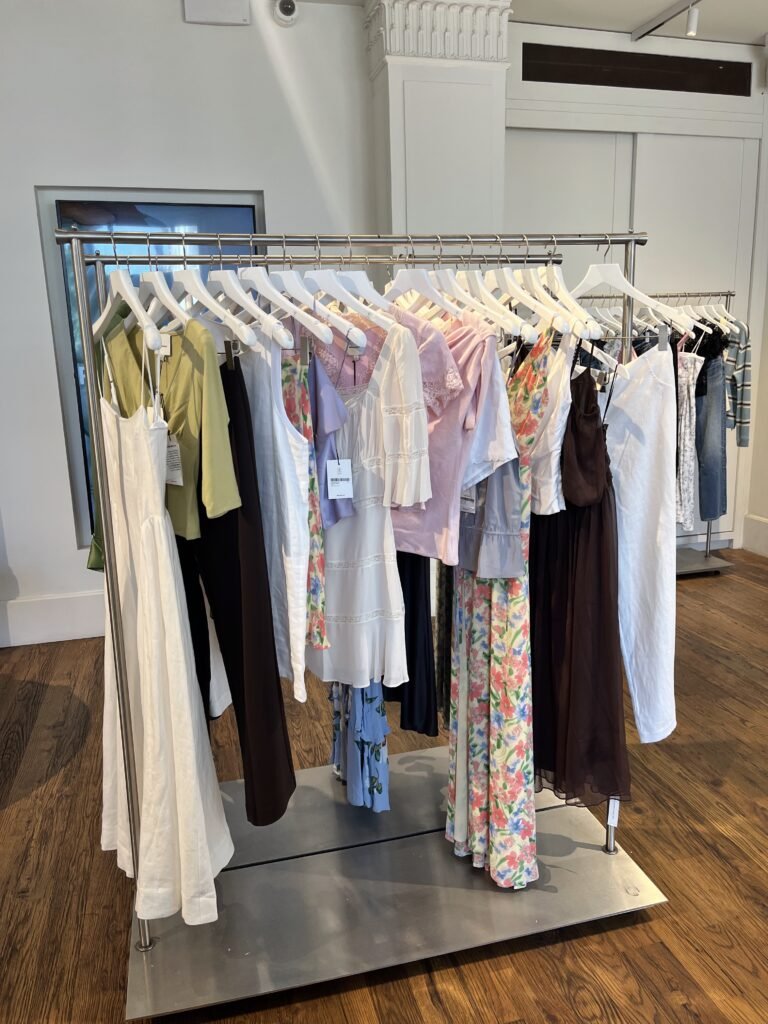
My first impression was just how little product there appeared to be.
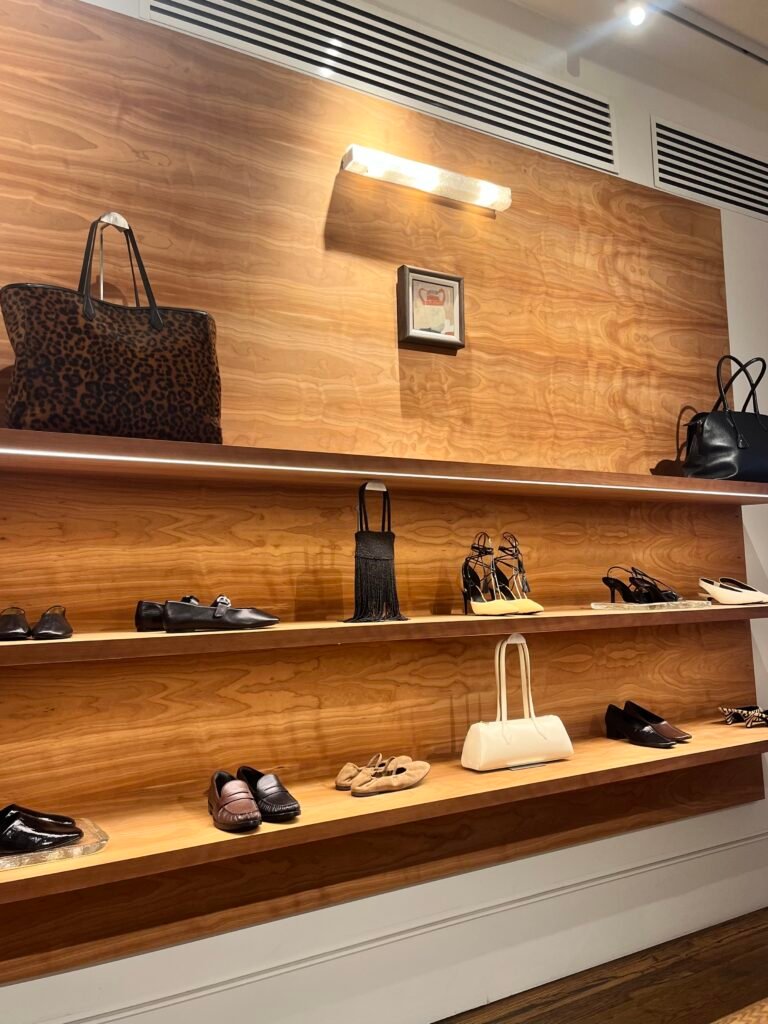
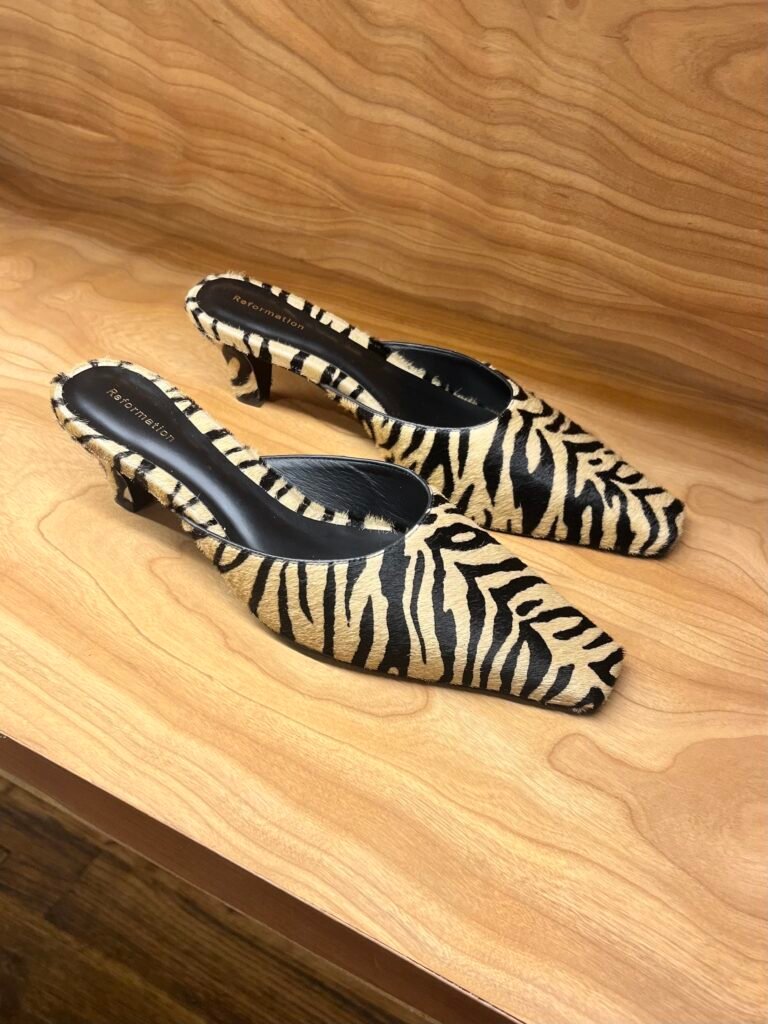
In most cases, there is just one item of each design on display, giving the feel of a carefully curated showroom rather than a traditional high street store. At first, it felt too limited, but the staff quickly explained that additional sizes were held in the stockroom.
Warm lighting and generous spacing between displays create a calm shopping environment, while indie music quietly plays in the background. During London’s July heatwave, the air conditioning was rather welcome and made it easy to spend longer browsing. I gravitated towards the summer dresses, unable to face trying on anything heavier.
With many dresses sitting around the £200 mark, this isn’t a brand built around impulse purchases. The quality largely reflects those prices too. Fabrics felt substantial, the construction appeared well finished and the pieces looked every bit as polished in person as they do online.
Fitting rooms and service
I was told there would be a 20 to 25-minute wait for a fitting room but it ended up being around half an hour. I managed to grab a seat on one of the sofas while I waited, but others weren’t so fortunate. Several customers left before their names were called, leaving staff calling for them across the shop floor.
It wasn’t quite the seamless experience the technology promises.
Once it was my turn, it became clear that the fitting rooms are meant to be the selling point of the entire store. Each changing room features a touchscreen displaying every item currently available in-store, along with every available colour and size. Until this point, first-time visitors could easily assume the product selection is much smaller than it actually is. Rather than getting dressed again and hunting through the store, you can tap the item you want and continue trying things on while a member of staff retrieves it.
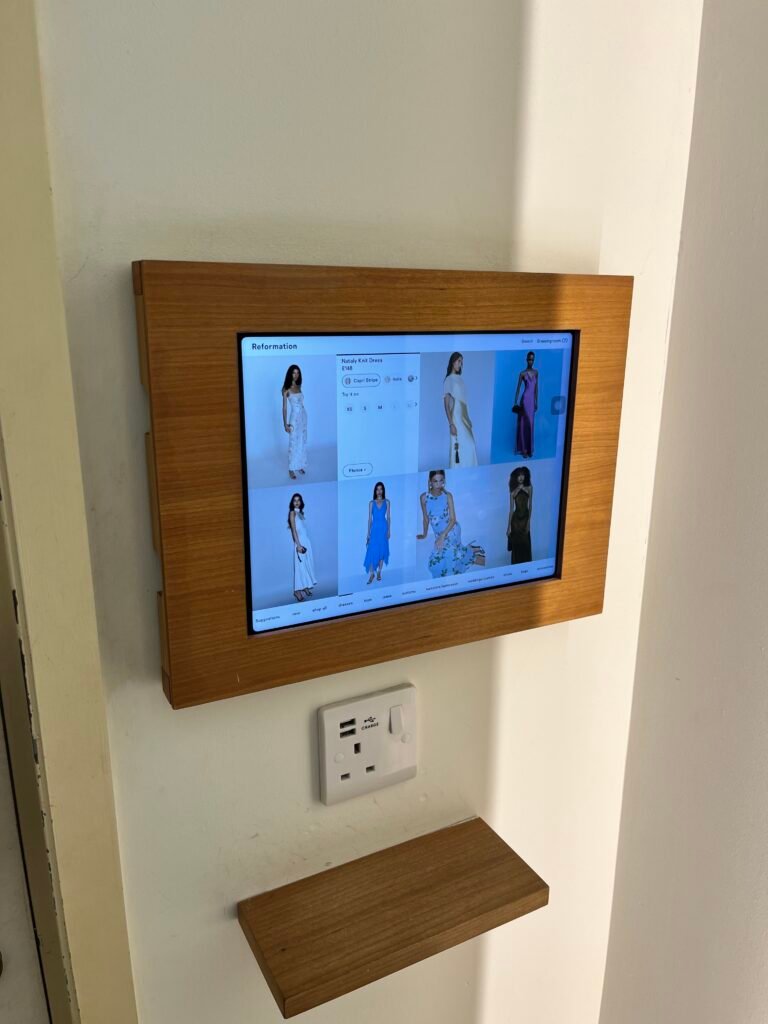
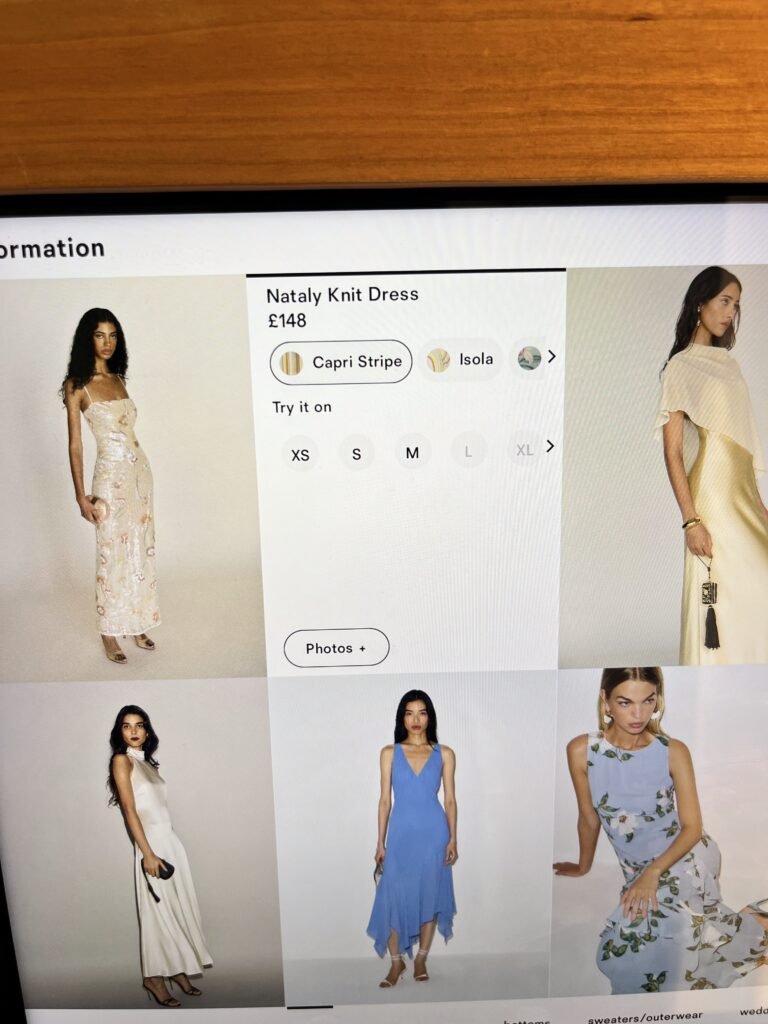
I requested a top I had seen on Reformation’s Instagram and it arrived within a couple of minutes. I also used the touchscreen to request a couple of items I hadn’t spotted on the shop floor, which proved genuinely useful.
That said, the system isn’t perfect. Because shoppers can keep requesting additional items without ever leaving their fitting room, it’s easy to see why waiting times begin to build. While the technology improves the experience once you’re inside, it arguably creates a bottleneck for everyone still waiting outside.
In conclusion
Reformation’s technology genuinely improves the fitting room experience and makes it far easier to browse the full collection than in a traditional store.
However, the lengthy wait, digital requests and staff ferrying garments between the stockroom and changing rooms suggest the system may struggle during busier periods. While the technology is useful, it gives the shopping experience an almost industrial feel that is slightly at odds with the sense of luxury the brand’s price point suggests.
I left empty-handed, not because I couldn’t find anything I liked. The dresses were flattering, well made and true to size. They simply sat outside my budget. For shoppers willing to spend £200 to £300 on a dress, Reformation offers one of the most innovative retail concepts on the high street, even if the reality feels a little less effortless than the brand’s carefully curated online image suggests.