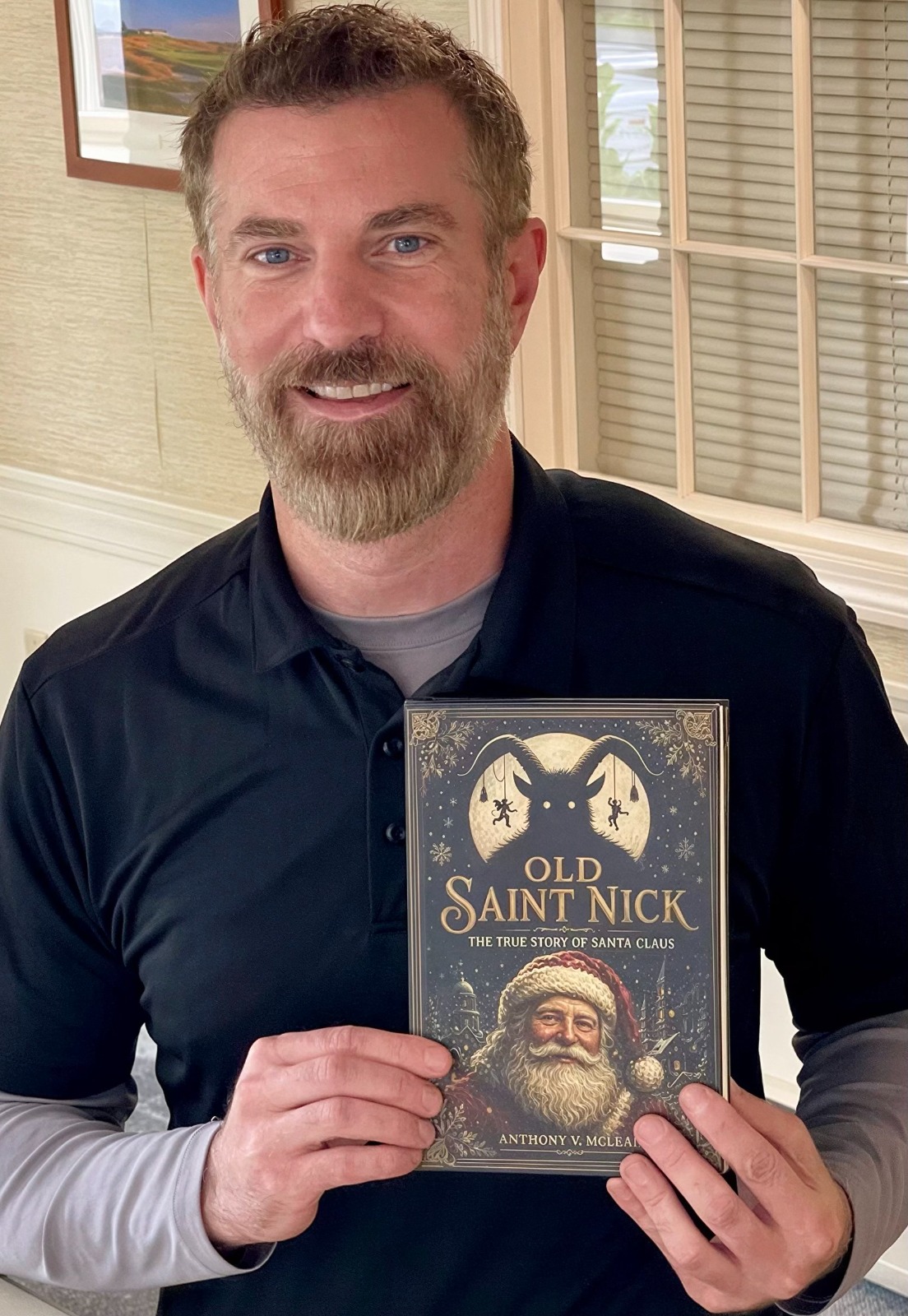

A sweeping Christmas fantasy traces Saint Nicholas through the unexpected journey that transforms a fourth-century bishop into the figure the world knows as Santa Claus.
Anthony V. McLean offers readers a different kind of Christmas story in Old Saint Nick: The True Story of Santa Claus, an imaginative novel that looks beyond the familiar sleigh, reindeer, elves, and North Pole traditions to ask a larger question: What if Santa Claus could finally tell his own story?
The novel opens on Christmas Eve, when Santa encounters Anthony, a man determined to learn the truth behind the legends. What follows is presented as his personal account of how Nicholas of Myra became Santa Claus—and why the story is far more complicated than holiday folklore suggests.
A Familiar Figure, Reimagined
McLean begins with Nicholas in Asia Minor in 343 AD. Already known for generosity, faith, and acts of kindness, Bishop Nicholas quietly helps a struggling father provide dowries for his daughters. His wish to remain anonymous fails, and the incident becomes one more story attached to his growing reputation.
The novel soon moves beyond the historical legends associated with Saint Nicholas.
Nicholas encounters Krampus, a terrifying demon who reveals that he was sent to kill him. Instead, Krampus makes a choice: he refuses to complete his mission and warns Nicholas that both of them are now in danger. Forced to flee, the unlikely pair begin a journey that changes each of them and reshapes the traditions readers associate with Christmas.
The Friendship Behind the Legend
At the emotional center of Old Saint Nick is the relationship between Nicholas and Krampus.
Their partnership begins with fear and distrust. Nicholas sees a creature from Hell; Krampus sees a man he was ordered to destroy. Yet circumstances force them to depend on one another, and over time their relationship grows into something neither expected.
The novel explores how companionship, compassion, faith, and sacrifice can challenge rooted ideas about good and evil. Krampus—known to Nicholas as Peter—becomes more than a supernatural companion. He becomes a protector, partner, and friend whose influence helps make Nicholas’s future possible.
That friendship gives the novel its emotional weight. The manuscript makes clear that although the story contains elves, toy-making, the North Pole, and other recognizable Christmas imagery, its deeper concerns are friendship and loss, faith, love, and sacrifice.
How Santa Claus Comes to Life
Across thirty chapters, the novel creates an interconnected explanation for many pieces of the Santa Claus tradition.
Readers follow Nicholas through different eras as familiar elements take shape: anonymous gift-giving, abilities, travels across the world, reindeer, Christmas Eve traditions, his famous appearance, and a home at the North Pole.
Rather than presenting those details as disconnected myths, McLean builds them into one continuous adventure for modern readers.
The result combines historical fantasy, religious themes, folklore, humor, supernatural conflict, romance, and Christmas nostalgia. Readers may recognize elements drawn from Saint Nicholas traditions and holiday imagery, but the novel reworks them into its own mythology.
More Than Holiday Whimsy
Despite its festive title, Old Saint Nick is not simply a light Christmas tale.
Its characters face danger, death, temptation, loss, spiritual conflict, and difficult moral choices. Nicholas’s generosity remains central, but the story also considers what it means to protect another person, to change after wrongdoing, to remain faithful under pressure, and to sacrifice for someone else.
Those themes are balanced by the gradual appearance of the Christmas traditions readers know today.
The book ultimately asks readers to look past the commercial image of Santa Claus and consider the values that might stand behind the legend: generosity without recognition, faith without certainty, friendship without condition, and goodness practiced for its own sake.
A Christmas Story for Those Who Still Believe
McLean dedicates the novel to his children, Matthew, Alexander, and Jenna, thanking them for making his Christmases magical, and to everyone who continues to keep the magic of Christmas alive.
That spirit carries through the novel’s final message. Santa’s story is presented not simply as an explanation of how he came to be, but as a tribute to the people and relationships that made his journey possible.
Old Saint Nick: The True Story of Santa Claus invites readers to return to the wonder of Christmas while discovering a version of the legend they may never have imagined—one shaped by danger and devotion, loss and redemption, and above all, an unforgettable friendship.
For readers who have ever wondered how Saint Nicholas could have become Santa Claus, McLean offers an answer that is adventurous, heartfelt, surprising, and rooted in the enduring idea that being good matters for reasons more than presents beneath a tree.