

This post was originally published on this site.
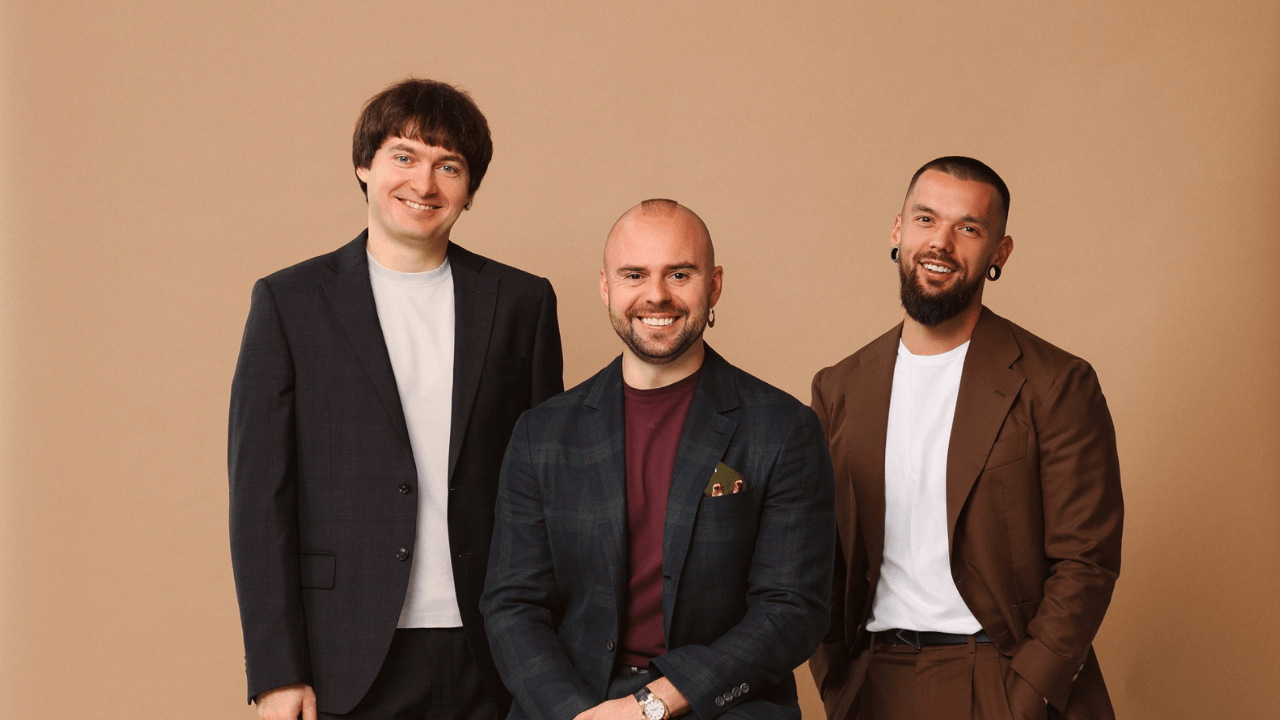
Jake Vygnan and his fellow Kyiv co-founders made an unusual bet when they moved into mobile dating: rather than build one app, they built two in 2017.
Hily targets the mainstream dating market, while Taimi is a fully inclusive LGBTQ+ dating app designed for people across the spectrum of sexual orientations, gender identities, and relationship preferences.
Unlike apps aimed primarily at one part of the queer community, Taimi positions itself as a single dating platform for lesbian, gay, bisexual, transgender, non-binary, queer, and other LGBTQ+ users.
I sat down with Vygnan on a trip to Kyiv earlier this year to learn all about it.
From general dating to an LGBTQI+ app
Taimi’s founders met as part of the management team at Genesis, where they worked on dating and other digital products. Further research convinced them to spin out their own company, where they quickly learnt that the opportunity extended beyond gay dating to the wider LGBTQI+ community.
“We thought, why not build a product for the whole community?” shared Vygnan.
Then the company made another pivot. Vygnan explained:
“We had this romantic idea of gathering the whole community in one app — not just for dating, but for communication, knowledge sharing, support, and creating a safe space. Essentially, we started building a social network for the LGBTQI+ community. And we failed.”
The problem wasn’t the idea but a lack of knowledge to execute:
“We were unfocused. We didn’t know exactly what we should develop next, which features to prioritise, or which problem we were actually trying to solve.
That became a serious issue because we’re self-funded. We’ve never raised external investment, so being self-sufficient is very important to us. If we aren’t earning enough money to reinvest in growth, that’s a problem. We decided to go back to our origins.”
According to Vygnan, it turned out to be the best decision they ever made:
“We became focused. We understood what we needed to do, we already had experience in dating, and suddenly we were solving one clear problem: why should somebody install our app for dating?”
One app, many identities
Taimi serves a huge range of gender identities and sexual orientations; Vygnan admits that this makes things much more complicated.
“With Hily, it’s easier because it is predominantly focused on heterosexual dating. One of our North Star metrics there is increasing the proportion of women in the user base. Dating apps generally have far more men than women.
A relatively good ratio might be 30 or 35 per cent women, whereas many apps are closer to 20 per cent. Hily is currently around 20 to 23 per cent women, so that’s something we’re working on.”
Taimi, however, is completely different because there are so many gender identities and sexualities.
“With Taimi, you have many different cohorts of people looking for different people, and the algorithms have to understand all of those combinations.”
The platform’s largest audience is lesbian users. It’s also very strong among transgender users because there aren’t many alternatives specifically serving them.
Balancing safety with privacy
Safety, moderation, and fraud detection are major priorities for Taimi, although Vygnan says this must be balanced with privacy:
“It’s an automated process. We don’t have people sitting there reading private messages. If somebody is harming or harassing other users, they will be banned.”
The apps also detect explicit imagery. On Hily, for example, images can be hidden until the recipient chooses whether to view them.
“If somebody sends an explicit image, we can hide it and ask the recipient whether they want to see it.”
Taimi also offers screenshot protection and allows users to disguise the app with a generic icon.
Keeping talent by turning them into founders
In 2024 Taimi launched appflame, an initiative focused on developing new products and nurturing the next generation of founders. appflame (employer brand for both apps) launched Ignite, an initiative focused on developing new products and nurturing the next generation of founders. It currently has four products: three apps and one content-based business. The initiative draws on the company’s experience in consumer apps, subscriptions, and product development to diversify into new businesses.
For Vygnan, however, the starting point is less the idea than the people behind it.
“We invest in the person or the small team. Of course, they pitch their ideas, and we have a playbook to validate them. But the short answer is: do we trust this person enough to invest our money in them?”
Most of those founders come from within the existing team, making Ignite a way to retain ambitious employees who may have reached the limits of their current roles.
“We have a surplus of two things: talent and money. Talented people want to grow, and sometimes there’s nowhere else for them to grow because somebody is already above them. If they’re brave enough, they can start their own product.”
Vygnan is realistic about the fact that not every experiment will succeed, but hopes some will grow into multimillion-dollar businesses.
“Obviously, some will close. That’s reality. But some will thrive, and we’re already seeing good traction.”
That diversification is also extending beyond in-house-developed products. In October 2025, Taimi participated in a €1.1 million Seed round for German healthtech startup Every Health, a virtual clinic providing LGBTQ+-focused healthcare, including testing, consultations, prescriptions, and medication delivery.
Supporting Ukraine beyond the workplace
Taimi’s Kyiv office can only be described as fancy, with a gym, meditation rooms, and sleep pods. Yet beyond the perks, the realities of operating during wartime have shaped the company in much more consequential ways.
The team established the appflame Foundation, which supports prosthetics and military leadership education initiatives in Ukraine.
Since 2023, the Foundation has partnered with “Captain’s Training,” a professional military education programme developed by leading military experts to NATO standards and incorporating lessons from Russia’s unprovoked full-scale invasion of Ukraine. More than 500 Ukrainian Defence Forces officers completed the training in 2023.
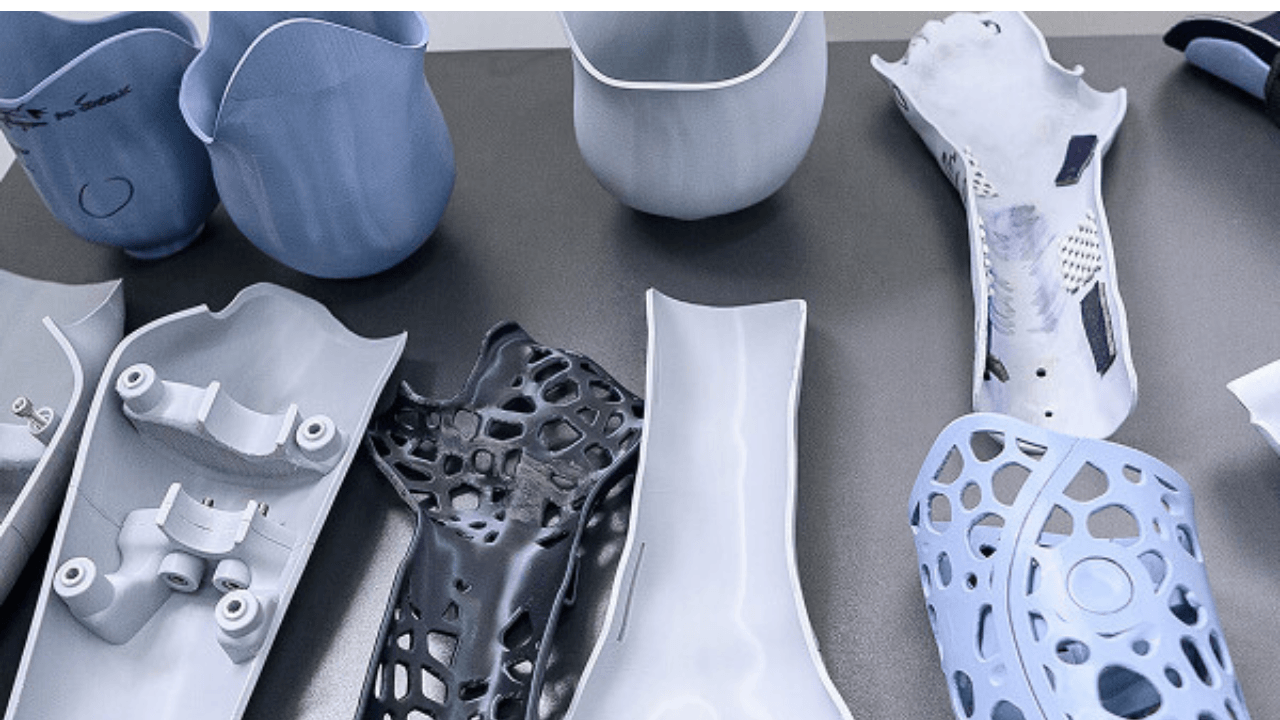
In 2025, the Foundation joined the “Future of Prosthetics System in Ukraine” project, which develops additive manufacturing technologies, localises production, and trains specialists to expand access to prosthetics for veterans, wounded service members, civilians, and children with amputations.
As part of the initiative, appflame provides veterans with grants to pursue Master’s degrees in Biomedical Engineering and Applied Mechanics at Igor Sikorsky Kyiv Polytechnic Institute, as well as a $200 monthly scholarship and associated study expenses.
The Foundation also provides tactical medical supplies, equipment, humanitarian aid, and other essential items to the Ukrainian military. It supports mobilised appflame employees with the resources they need for their service while retaining their jobs and continuing their compensation, and provides financial and practical assistance to their families and loved ones.
appflame employees also take part in volunteer initiatives, including donating blood, making trench candles and power banks for the military, and participating in charity runs.
Gen Z isn’t abandoning dating apps
Taimi and Hily are primarily built for Gen Z, though the companies are already preparing for Gen Alpha. While LGBTQI+ dating remains a smaller market than heterosexual dating, Vygnan sees it growing as more people become comfortable openly identifying themselves. He eschews the sentiment often shared in the media that Gen Z is looking for love in person, asserting:
“People say they want more authenticity and less digital interaction, but we don’t see that shift in the numbers yet. Dating apps give you access to far more people. They also make rejection easier.
One of the greatest difficulties with meeting somebody in real life is the fear of rejection. On a dating app, that isn’t really an issue in the same way. You like somebody, and if they like you back, you can start talking. Online dating isn’t going anywhere. We can see that in our numbers.”
An untapped source of LGBTQI+ dating data
Taimi also sits on a significant body of data about LGBTQI+ dating, which the company uses for research and analysis, some of which it publishes. The company’s research also points to why LGBTQI+-specific dating platforms can serve a function beyond matching.
In a 2026 survey of 1,200 LGBTQ+ adults, 57 per cent said dating apps significantly reduced the burden of repeatedly coming out, because their identity could be communicated through their profile.
Another Taimi survey of 2,503 US LGBTQ+ users found 85 per cent had recently been ghosted, with 74 per cent experiencing it more than once.
“There isn’t enough discussion about what it actually means to build a dating product for the whole LGBTQI+ spectrum, or about the everyday dating experiences of people across that spectrum. We have a lot of data that can help illuminate that,” Vygnan said.
The road to two million daily users
Taimi is intentionally focused on the US — the most competitive and largest market in the sector. The company’s next major ambition is to become an IPO-ready company — not necessarily to go public, but to reach the required level of maturity across its product, audience, operations, and business.
A key milestone on that journey is reaching two million daily active users.
“That would make us bigger than Tinder or Grindr in the US in terms of that metric,” Vygnan explained.
“Right now, we’re at almost 350,000 daily active users. We’re growing each quarter and each month, almost every day. The main issue is the pace.
If you project the current trajectory, reaching that goal could take five or six years. We want to accelerate it.”
Both Taimi and Hily are profitable and growing, while Taimi now has a team of around 100 people spread across locations including London, the US, and Cyprus.
Why Vygnan wouldn’t launch a dating app today
For anyone considering launching a dating app today, Vygnan asserts that the ship has already sailed.
“A dating app is essentially a marketplace, and the fundamental problem is the cold start. You have to acquire a lot of people quickly and have them online simultaneously. If you acquire five users today, your app doesn’t really do anything for them. There aren’t enough people there.
So you either need an enormous amount of money you’re prepared to burn to acquire users simultaneously, or you face a very difficult problem.
Over the last five or seven years, while we’ve been building these apps, we’ve seen many other dating apps disappear.
But there is one advantage to dating in the AI era: you can’t replace the people.
If you want to find somebody, ultimately you’re looking for another human being. You can’t replace our app with a prompt.
So I think we’re safe for now.”
Lead image: Taimi and Hily co-founders, Jake Vygnan, Alex Pasykov, and Dmytro Kononov.