

This post was originally published on this site.
The Materialist is building a business around turning a structural problem across fashion manufacturing – surplus fabric – into a scalable sourcing channel for brands at every level of the market.
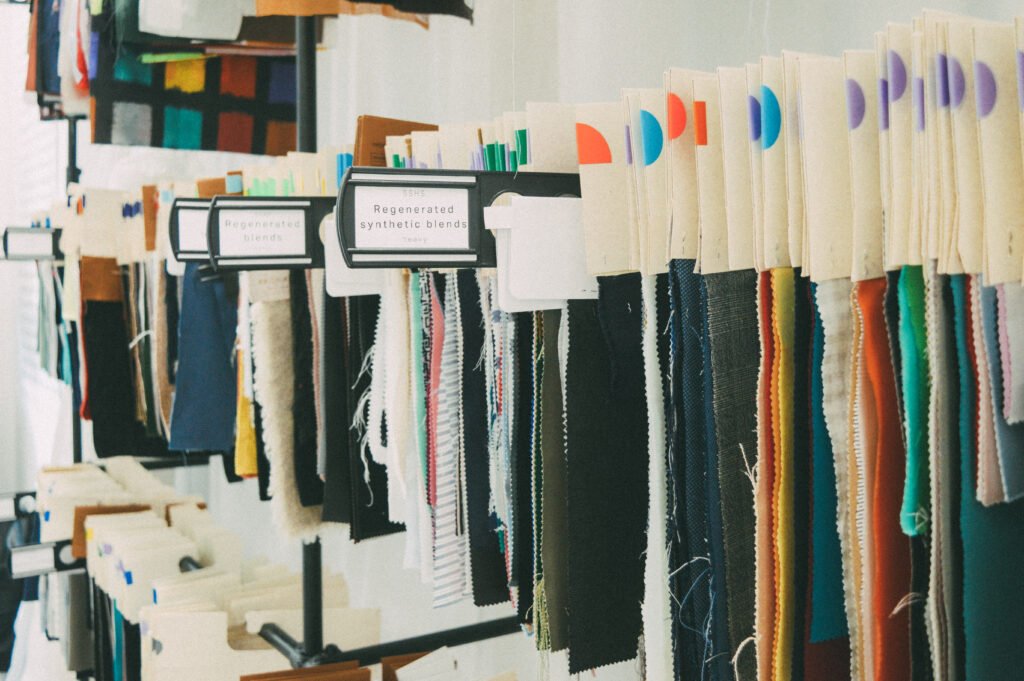
Liv Khan, who co-founded The Materialist together with Lavinia Santovetti in 2024, says the platform now holds over 10,000 fabric varieties in its showroom, with fabric rolls available at various quantities, from 30 to 3,000 metre lengths.
The Materialist’s business proposition is simple, yet pioneering. The platform connects fashion houses, designers, students and “other visionaries” with high-quality fabrics that have gone un-used in a manufacturing process. A staggering 25% of fabrics that are produced end up being unused, so there is no shortage of stock.
Most importantly, the platform isn’t just inspiring a more circular textiles ecosystem – it’s scaling it. The commercial model of the business is built around repeat supply rather than one-off collaborations, with core fabrics, such as plain black wools and white cotton poplin, forming a core part of the offer alongside seasonal and luxury pieces.
Recent pop-ups with LVMH-backed Nona Source and Vivienne Westwood have raised its profile, but the brand has its sights set on far more.
In this interview, Liv addresses misconceptions around deadstock quality and scale, explains why fashion has historically handled surplus differently from other industries, and sets out what it takes for brands to move deadstock from capsule experiment to embedded sourcing strategy.
How widespread is overstocking as a problem across the fashion industry?
Surplus fabric, new and unused material the industry calls deadstock, is a problem baked into the way fashion manufacturing works, with at least 25% of all fabric produced ending up unused.
The causes are largely structural. Mills and brands routinely overestimate what they need, and minor but unavoidable production variations, such asa shade inconsistencies, slight weaving or dyeing defects, mean large volumes are rejected before a single garment is cut. Minimum order quantities compound the issue further: brands are locked into buying more than they require, and when external shocks like Brexit or Covid cause cancelled or reduced orders, that excess only grows.
In your experience, what do most brands actually do with excess or end–of–roll stock today?
It varies. More brands are making genuine efforts to work through their own inventory, but doing so properly requires resources – stock needs to be catalogued, stored, and managed, which many brands don’t have the capacity for. Beyond that, the most common routes are selling to jobbers at a low per–metre price, donating to students or educational institutions, or simply doing nothing – leaving stock to sit in warehouses for seasons, sometimes years.
It’s a problem that touches every level of the industry, from small independent labels to large high street retailers. What’s been missing is a reliable, efficient way for brands to actually unlock the value sitting in their inventory – and to ensure it doesn’t ultimately end up as waste. That’s exactly what we provide.
Are there misconceptions about deadstock that you still encounter from designers or buyers? How has this changed over the last couple of years?
The biggest misconception is around quantity. Many designers and buyers assume deadstock means offcuts and end–of–roll remnants –a few metres of this, a few metres of that. In reality, we hold over 10,000 varieties in our showroom alone, many with more than 300 metres available and some with quantities as high as 3,000 metres – it’s a genuine, scalable resource.
The other persistent myth is around quality. Deadstock carries an unwarranted reputation for being defective or second–rate. Our fabrics are premium, luxury, and brand new – they simply weren’t used by the original buyer. That’s it. There’s no hidden reason they’re available.
Both of these perceptions have begun to shift over the last couple of years as deadstock has moved further into the mainstream conversation around sustainable sourcing, but they still come up regularly – which is why education remains such an important part of what we do.
From your perspective, what makes the fashion industry’s approach to deadstock different from how industries like interior design or automotive manage theirs?
The fundamental difference is how other industries treat surplus materials as an asset to be recovered, whereas fashion has historically treated it as a problem to be hidden or disposed of.
In automotive, surplus components are rigorously tracked, returned to suppliers, repurposed across model lines, or fed back into manufacturing. Waste has a clear cost attached to it, and there are established systems for managing it. Interior design works similarly – surplus fabric and materials are catalogued, held as samples, or sold on through well–established trade channels. There’s no stigma attached to it; it’s just inventory management.
Fashion, by contrast, has long had a cultural resistance to transparency around surplus. Admitting to excess stock – particularly in luxury – has been seen as a brand risk, which is partly why so much has historically been destroyed rather than redistributed. The supply chain is also far more fragmented, with fabric often held at both mill and brand level, with little visibility across either.
What’s changing is that sustainability pressure and cost pressure are converging. Brands that once wouldn’t acknowledge their deadstock publicly are now actively looking for solutions, which is exactly where we operate. The infrastructure for managing surplus fabric properly is finally starting to catch up with the scale of the problem.
Are there any overarching trends that you are seeing in the types of fabrics designers/brands are requesting?
Our range is broad enough that we’re not really beholden to trends in the way a conventional fabric supplier might be. We carry everything from tailoring wools, cotton shirting, silks, lace and organza through to jerseys, technical fabrics, tulles, satins and faux furs: there’s genuine depth across categories.
What we do see is a natural seasonality in how clients come to us. Designers tend to arrive with a specific collection in mind, and we work with them across multiple departments within a brand – womenswear, menswear, kidswear, accessories – which means we need to hold a wide and varied inventory at any given time.
A core part of our offer is continuity fabrics: plain black wools, white cotton poplin, and other wardrobe staples that never really go out of demand and can be worked into collections season after season. Alongside those, we regularly receive more special or seasonal pieces – bridal satins, for instance – and when something exceptional comes in, we make sure our network knows about it. There’s always something new arriving, which keeps the offer fresh without it ever being trend–dependent.
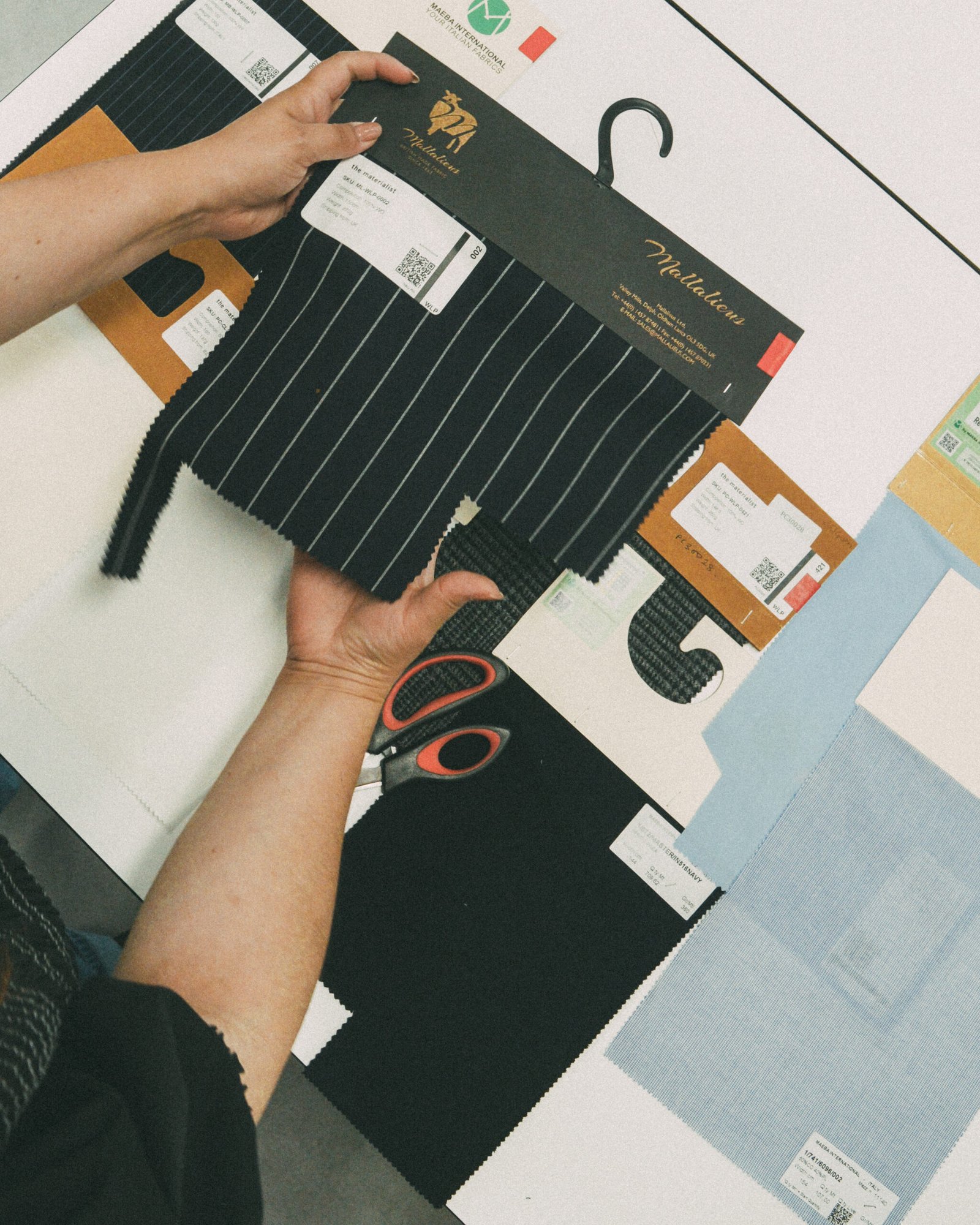
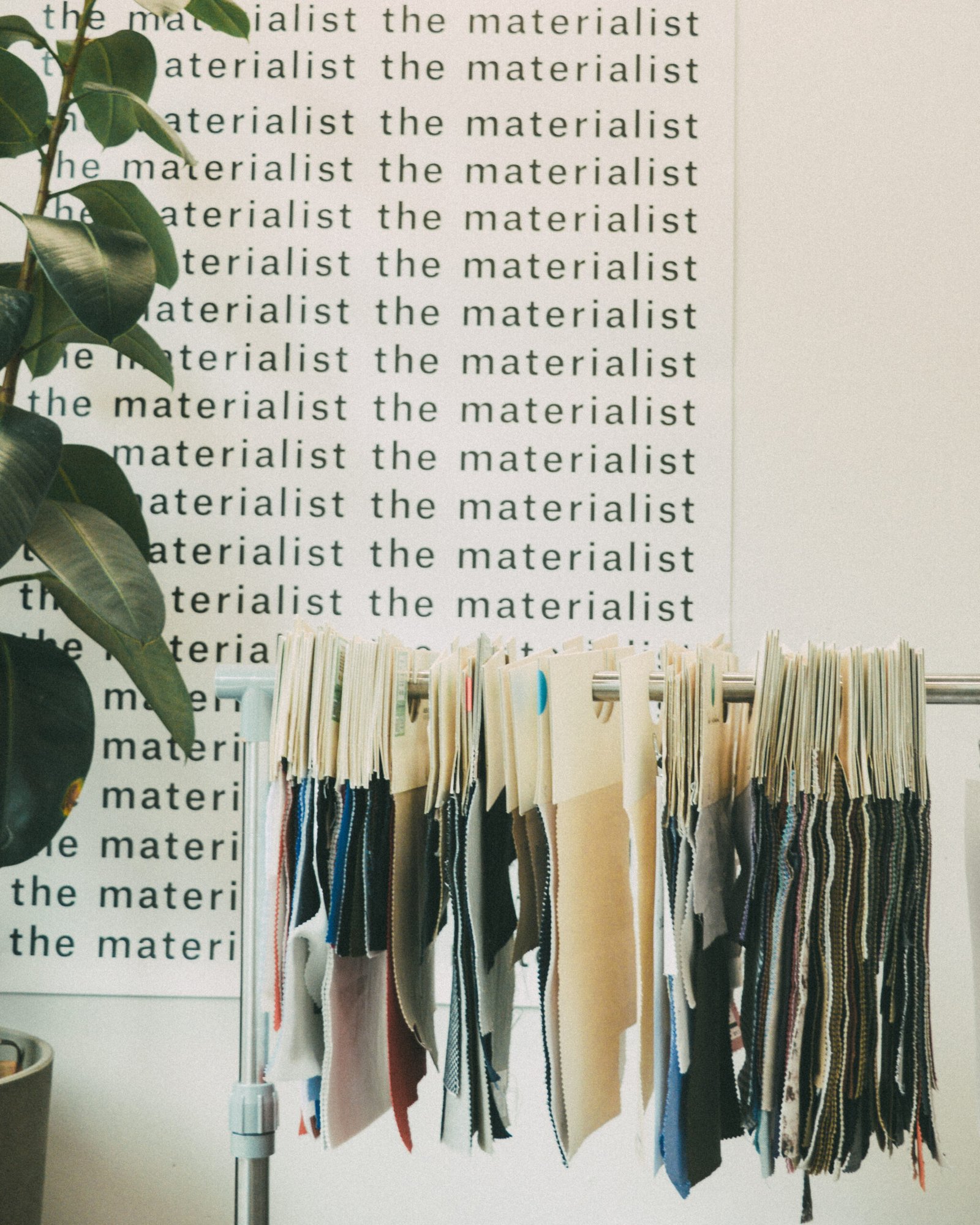
Visiting your showroom I could see thousands of beautiful fabric swatches. What is the deadstock supply currently like, and what quantities of fabrics do you usually get in?
Supply is strong and constantly moving. We’re receiving new stock all the time, which is necessary because good deadstock sells quickly – clients who know the market move fast when they see something they want.
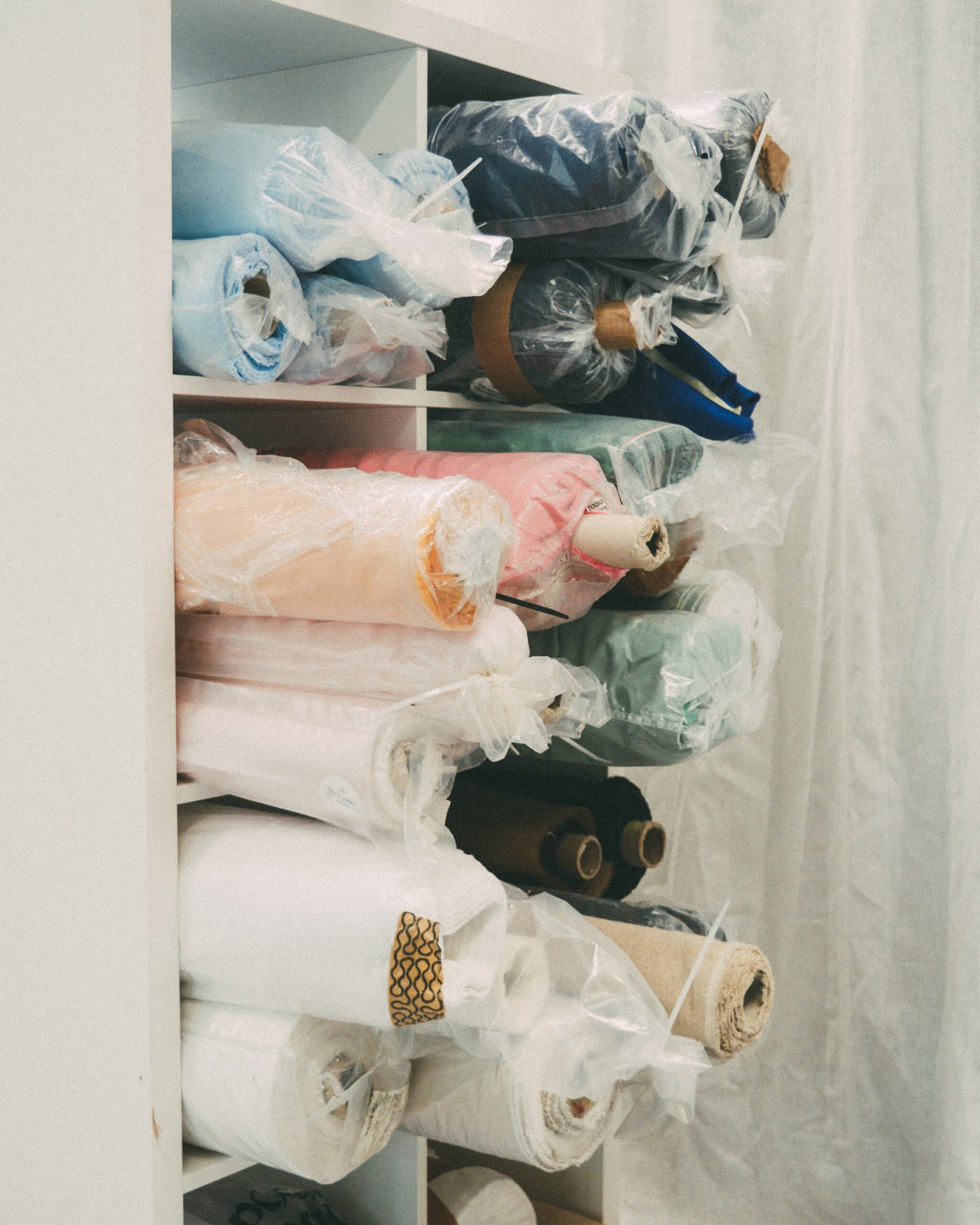
Quantities vary enormously, which is part of what makes us different from the offcuts–and–remants perception we touched on earlier. We hold anywhere from 30 metres up to 3,000 metres on a single article, which means we can genuinely service brands at scale, not just independent designers looking for a few metres to sample with.
What usually brings clients to you when they’re looking for deadstock fabrics, do they come with a very specific brief?
It really depends on the client and where they are in their process. Some arrive with a very specific brief – a swatch they need to match, a particular weight or composition – and we work to find the closest possible option from what we hold.
But the most exciting and, we’d argue, most impactful way of working is when a whole design team comes in at the very beginning of the design process and uses our inventory as a starting point for their collection. Rather than deadstock being a last–minute substitute or a sustainability add–on, it becomes the foundation – collections are built around what’s available, which is how it should work.
When clients engage with us that way, there’s far more scope to embed deadstock meaningfully into the core of the brand’s sourcing strategy. It also tells us something about their intentions – these are the brands making a genuine, considered commitment to more sustainable sourcing, rather than ticking a box. That’s the kind of relationship we find most rewarding, and frankly, it produces better results for everyone.
You recently ran a pop–up with Nona Source. How would you describe between your approach and theirs?
It was a brilliant collaboration and Nona Source are a fantastic partner – they’re doing important work in proving that deadstock and luxury are not mutually exclusive, which is a message the industry still needs to hear.
Our approaches are closely aligned in many ways, but where we differ is in the breadth of what we offer. We work with brands holistically – clients can come to us to source deadstock fabric, but they can also use us to sell their own excess inventory, or participate in our donation programmes supporting emerging designers and students. It’s a full circle solution rather than purely a sourcing platform, which means brands can address both sides of the problem: what they need to buy and what they need to clear.
You’ve also recently hosted a mini pop-up with Vivienne Westwood. What are some other dream partnerships you would like to explore in the future?
The Vivienne Westwood pop–up was a real highlight for us, and there’s plenty more in the pipeline. We have a whole wishlist of brands we’re hoping to work with over the next year – household names that we believe will genuinely help bring deadstock into the mainstream conversation.
Beyond fashion, we’re also increasingly working with theatre, film and TV, which is a really exciting space for us, as well as expanding into the interiors world. Both industries have a huge appetite for quality fabric and a real appreciation for what deadstock can offer. We don’t want to give too much away just yet, but watch this space!
I can imagine that many brands experiment with deadstock, but what does it take for them to scale deadstock beyond a one-off collection?
Experimentation is easy; integration is the hard part. A brand can dip into deadstock for a capsule collection, generate some great press around it, and then quietly go back to their usual supply chain. Scaling it requires a genuine shift in how a brand approaches the design and sourcing process.
The brands that make it work at scale are the ones that stop treating deadstock as a constraint and start treating it as a creative starting point – which brings us back to how we prefer to work with clients. When design teams come to us at the beginning of the process rather than the end, deadstock stops being a compromise and becomes a genuine foundation.
There are also practical requirements: you need a reliable supply partner who can offer consistency and volume, not just one–off pieces. That’s a big part of what we’ve built – continuity fabrics that can be reordered, and enough depth of stock across categories that brands can plan around us with confidence rather than treating us as a back up option.
Ultimately, it comes down to intention. The brands that scale deadstock successfully are the ones where sustainability is embedded in the business, not bolted on for marketing purposes. You can usually tell the difference quite quickly.
Do you find certain teams–design, merchandising, buying–tend to champion deadstock more than others?
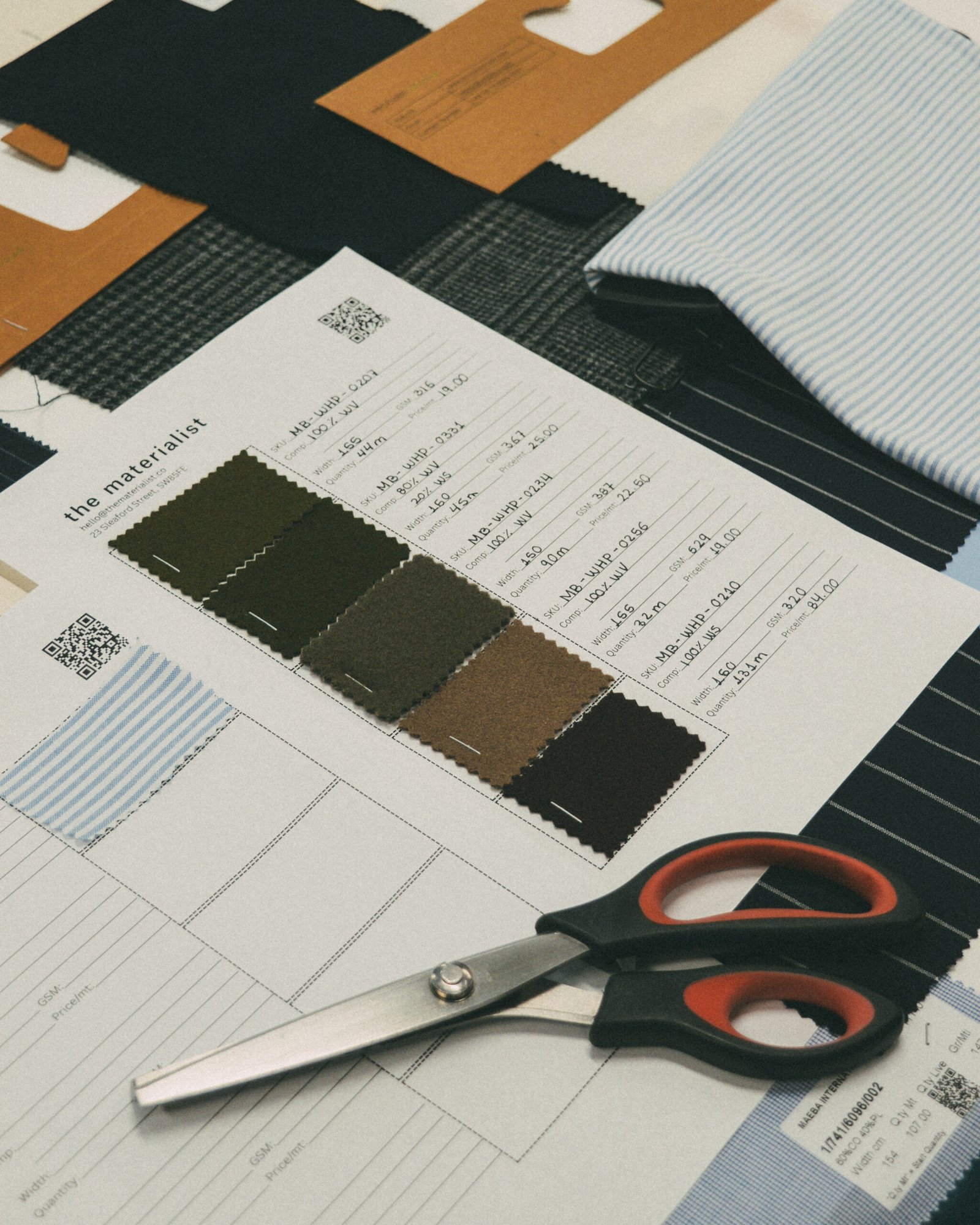
It varies by brand, and often comes down to individuals rather than departments. That said, design teams tend to be the earliest adopters – there’s a natural creative excitement around working with something exclusive and designers really appreciate our quality.
Interestingly though, once finance, production and buying teams understand what we offer, they’re often just as enthusiastic – sometimes more so. Our fabric is competitively priced and available immediately, which solves real problems for those teams around budget, lead times and speed to market.
What kind of mindset shift do you think the industry needs to adopt to work meaningfully with deadstock?
The biggest shift is moving deadstock from an afterthought to a starting point. For too long it’s been treated as a compromise – something you turn to when a preferred fabric isn’t available, or when a brand needs a sustainability marketing story. That thinking has to change.
The industry also needs to let go of the idea that working with what already exists is a creative limitation. The most exciting work we see comes from designers who treat constraint as a creative tool, not an obstacle.
And practically, brands need to build sourcing timelines that allow deadstock to be genuinely considered from the beginning – not approached at the last minute when decisions have already been made. Treat fabric that already exists as the first option, not the last resort.
What are your plans for The Materialist for the next 5 years?
The last few years have been about foundations – getting a real understanding of the industry and how it works; building our product, and establishing strong supplier relationships and partnerships. We feel confident those foundations are solid, and now we’re ready to scale.
The ambition is to become the number one destination for sustainable fabric sourcing – not just within fashion, but across industries. We’re growing our supplier base, expanding our network, and building out some genuinely exciting new features on our platform that will make it far simpler for brands to find exactly what they need without having to manually browse thousands of products.
A lot of what we’re developing uses AI to automate processes that have remained stubbornly analogue for decades – sourcing fabric is still an incredibly time–consuming, human–intensive process, and we want to change that. There’s a lot coming!